
When you first start trading, one of the first concepts you encounter is order types.
Even with the same Buy or Sell action, the timing of entry and the outcome can vary depending on how the order is placed, making it essential to understand this concept clearly.
In the forex market, order types are broadly divided into market orders and pending orders.
🔹 Market Order: Trading Instantly
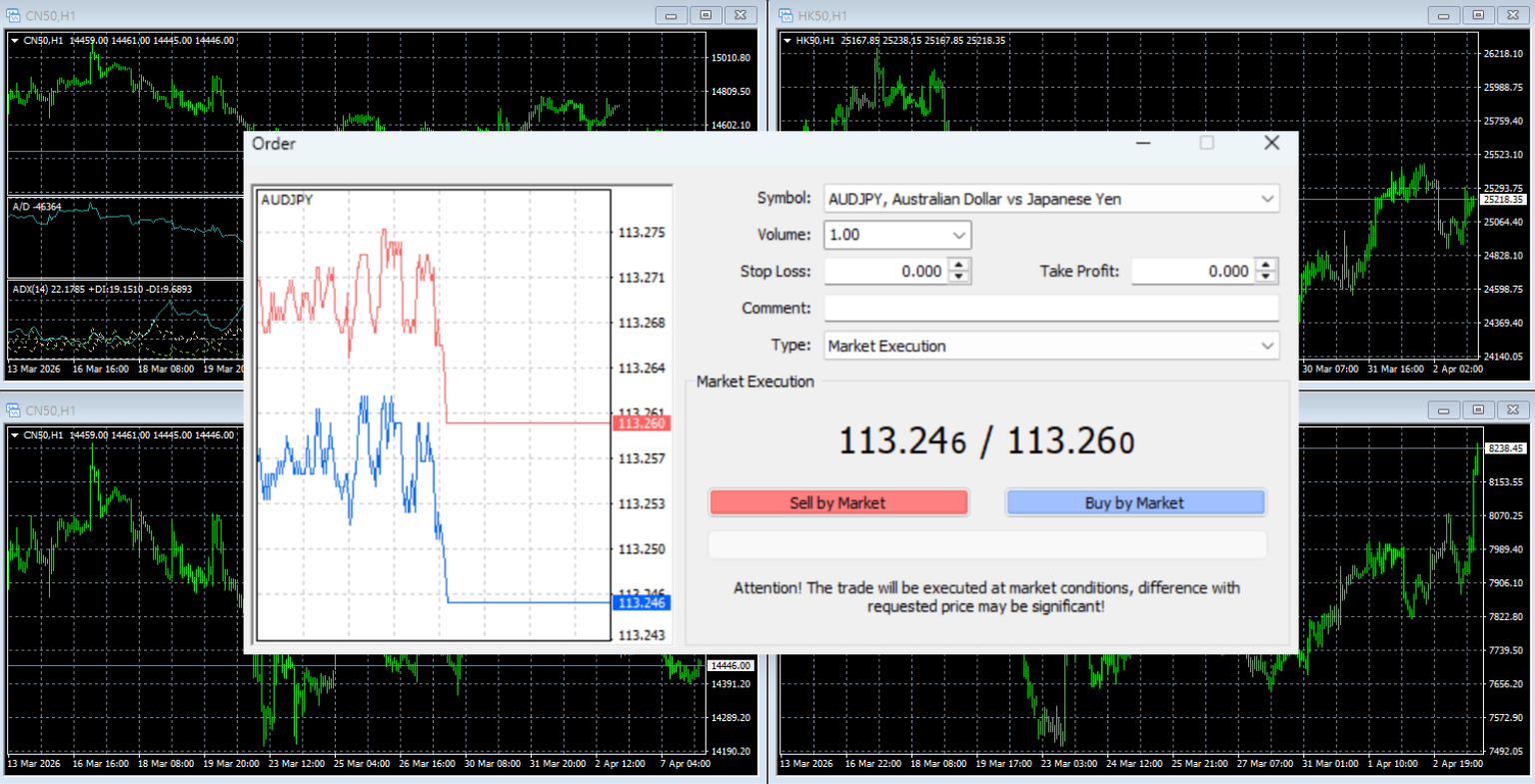
A market order is the most basic type of order, where a trade is executed immediately at the current market price.
For example, if EUR/USD is trading around 1.1000 and you press the Buy button, the trade is executed instantly at the price currently available in the market.
Likewise, selecting Sell will open a position immediately at the current price.
This method allows for quick entry, but it is executed at the “current market price,” not necessarily the exact price you see or want.
Especially during high market volatility, the price you see and the actual execution price may differ slightly—this is called slippage.
🔹 Pending Order: Waiting for Your Desired Price
If a market order is about entering immediately, a pending order is a method where you set your desired price in advance, and the trade is executed automatically when that price is reached.
In other words, instead of entering right away, you wait for a specific price level and enter under planned conditions.
For example, if EUR/USD is currently at 1.1000, you may prefer to wait until it drops to 1.0950 to buy at a better price.
Alternatively, you might want to buy when the price breaks above 1.1050, signaling the start of an upward trend.
This approach allows for more structured trading, as it executes trades only at pre-planned levels rather than emotional decisions.
Pending orders can be divided into two types based on the entry strategy.
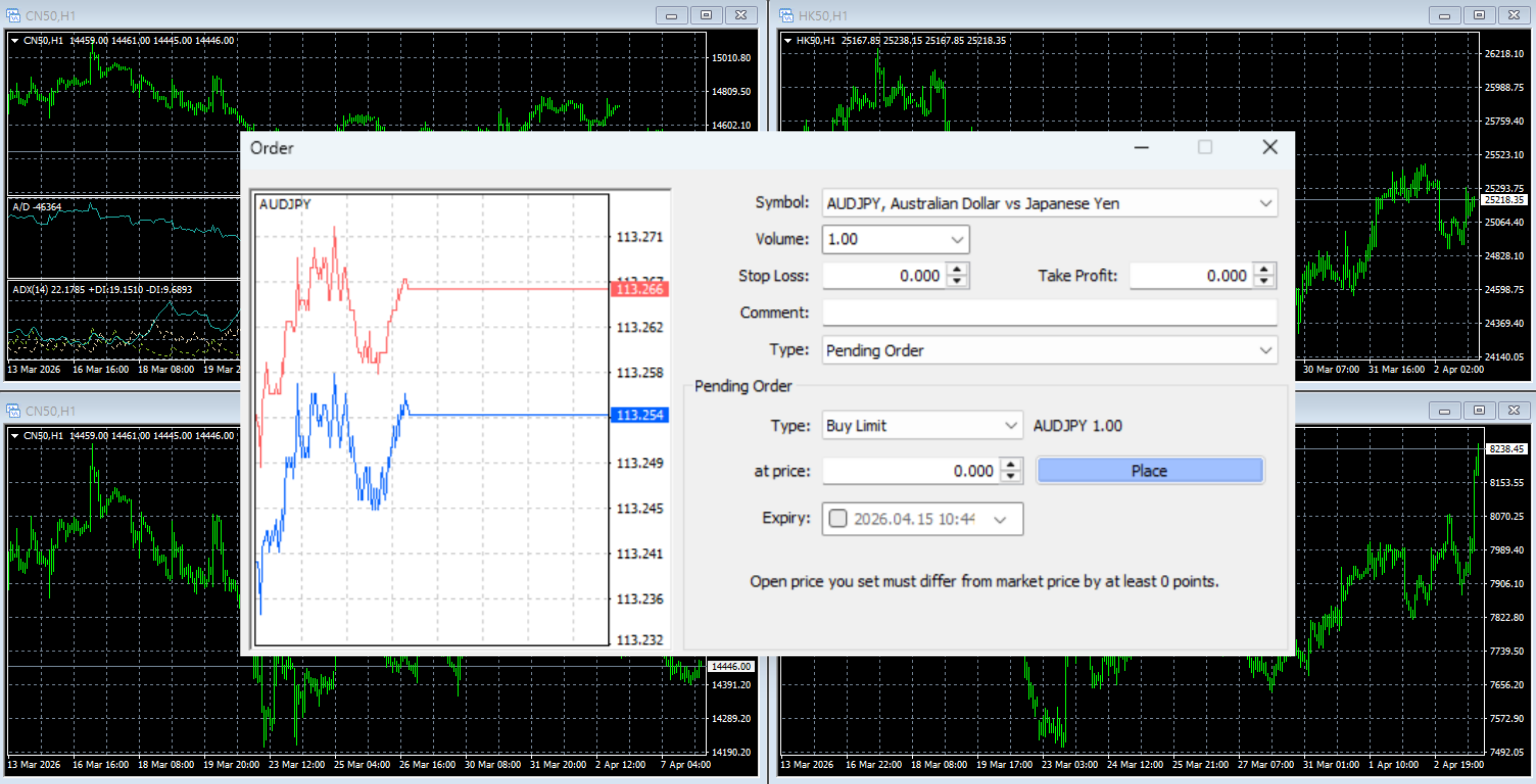
▪ Limit Order: Waiting for a Better Price
A Limit order is used when you want to execute a trade at a more favorable price than the current market price.
For example, if EUR/USD is at 1.1000, you may place a Buy Limit at 1.0950 to purchase at a lower price when the market declines.
Conversely, if you want to sell at a higher price than the current level, you would use a Sell Limit.
This type of order is often understood as “waiting for a better price.”
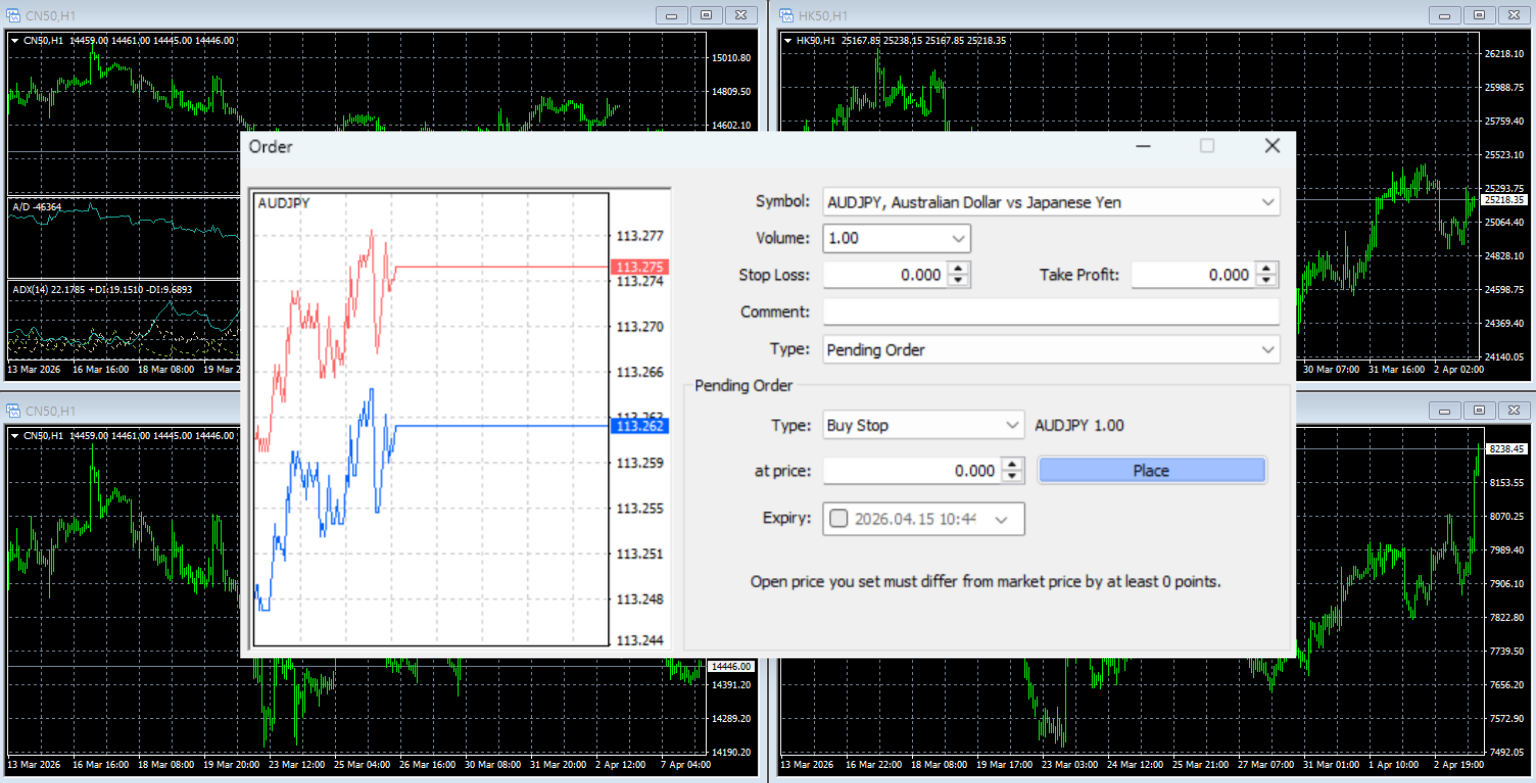
▪ Stop Order: Following the Momentum
A Stop order involves buying at a higher price or selling at a lower price than the current market level, which may initially seem disadvantageous.
However, when the price breaks through a certain level, it can signal the start of a new trend.
Stop orders are used to follow that momentum.
For example, if EUR/USD is at 1.1000, placing a Buy Stop at 1.1050 means you expect the upward trend to continue once that level is broken.
Conversely, placing a Sell Stop below 1.0950 means you expect further downward movement.
In summary:
- Buy Limit: Buy below the current price
- Buy Stop: Buy above the current price
- Sell Limit: Sell above the current price
- Sell Stop: Sell below the current price
🔹 How to Close a Trade (Exit)
Closing a trade is just as important as entering one.
The process of closing a position is called closing (or exiting) and is done by placing an opposite order.
If you entered with a Buy position, you close it with a Sell order.
If you entered with a Sell position, you close it with a Buy order.
This is because forex trading always involves buying and selling currencies simultaneously, so an opposite order is required to close the position.
For example, if you buy EUR/USD at 1.1000 and the price rises, closing the trade with a Sell order locks in a profit.
If the price falls, closing it results in a loss.
🔹 Why Are Order Types Important?
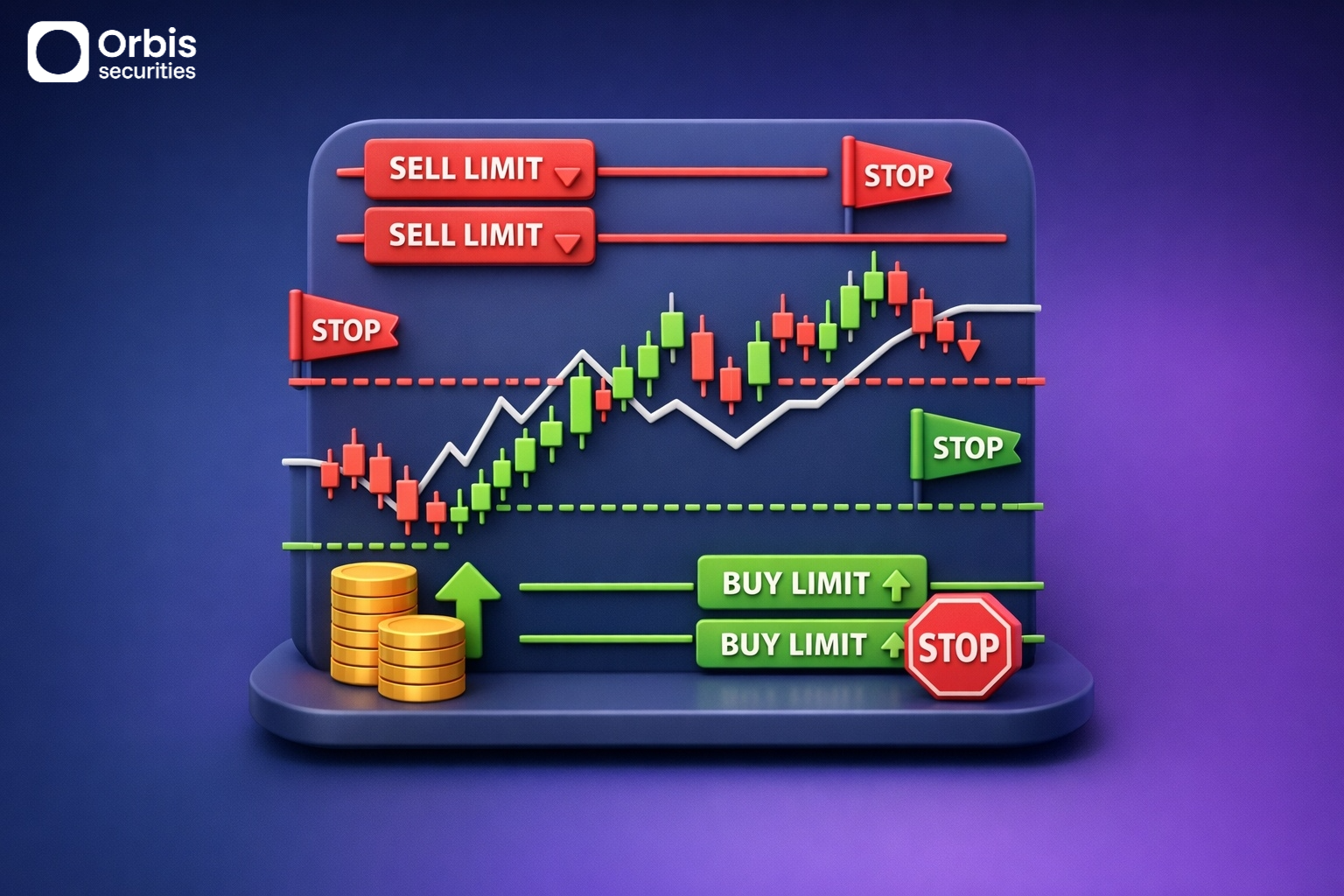
Beginners often think that “getting the direction right is all that matters.”
However, in real trading, the method of entry can significantly affect the outcome.
Even if you expect the market to rise, your results will differ depending on whether you enter immediately, wait for a pullback, or follow a breakout.
Each approach leads to different risk and reward structures.
Therefore, forex trading is not just about choosing Buy or Sell—it is about planning how to enter the market.
Understanding order types is an essential part of building a structured and effective trading strategy.