
Orbis Securities Logo
Orbis
Trading
Markets
Trading Platforms
Partnership
Customer Service
LoginSign Up

© 2025 Orbis Securities

Legal Information

This website is owned and operated by Orbis Securities (Pty) Ltd, a Limited Liability Company incorporated under the laws of South Africa, with registration number 2024/224812/07 and registered office address at 18 Cavendish Road, Claremont, Cape Town, Western Cape 7708, South Africa. Orbis Securities (Pty) Ltd is regulated by the Financial Sector Conduct Authority (FSCA) of South Africa with regulatory number FSP 54619.

The physical office address at Office 218, 50 Long Street, Cape Town, 8001, South Africa.

Regional Restriction

Orbis Securities (Pty) Ltd does not provide services to individuals of U.S. nationality, residents or any persons residing in jurisdictions identified as restricted or sanctioned by international regulatory authorities. Restricted countries and sanctioned jurisdictions include Afghanistan, Belarus, Cuba, Iran, Iraq, North Korea, Libya, Russia, Somalia, Syria, Ukraine, Yemen. This list is non-exhaustive and may be updated from time to time to comply with evolving international laws and regulations. Information in this website and services also not use by any person in any country or jurisdiction where such distribution or use would be contrary and deemed unlawful to local law or regulation.

Risk Warnings

Trading Derivatives carries a high level of risk to your capital, and you should only trade with money you can afford to lose. Trading Derivatives may not be suitable for all investors, so please ensure that you fully understand the risks involved and seek independent advice if necessary. For further assistance, please contact our Customer Support Team: support@orbissecurities.com or contact us at ‪+27 10 288 2018‬.

Orbis

  • About Orbis
  • Why Orbis?
  • Licenses & Regulation
  • Legal Documents

Trading

  • Account Types
  • Trading Server
  • Deposit
  • Withdrawal
  • Trading Conditions
  • Spreads
  • Swap
  • Margin & Leverage
  • Dynamic Leverage
  • Market Calendars
  • Trading Hours
  • US Earnings
  • AU Earnings

Markets

  • Forex CFDs
  • Commodity CFDs
  • Index CFDs
  • Index CFD Dividends
  • Cryptocurrency CFDs
  • Share CFDs
  • Share CFD Margins
  • Contract Specifications

Trading Platforms

  • MetaTrader 4
  • MetaTrader 5

Partnership

  • Partnership Overview
  • Partnership Benefits

Customer Service

  • Notice
  • Help & Support
  • Account Opening Guide
  • MT4 User Guide
  • MT5 User Guide
  • Economic Calendar
  • Trading Education

© 2025 Orbis Securities

Legal Information

This website is owned and operated by Orbis Securities (Pty) Ltd, a Limited Liability Company incorporated under the laws of South Africa, with registration number 2024/224812/07 and registered office address at 18 Cavendish Road, Claremont, Cape Town, Western Cape 7708, South Africa. Orbis Securities (Pty) Ltd is regulated by the Financial Sector Conduct Authority (FSCA) of South Africa with regulatory number FSP 54619.

The physical office address at Office 218, 50 Long Street, Cape Town, 8001, South Africa.

Regional Restriction

Orbis Securities (Pty) Ltd does not provide services to individuals of U.S. nationality, residents or any persons residing in jurisdictions identified as restricted or sanctioned by international regulatory authorities. Restricted countries and sanctioned jurisdictions include Afghanistan, Belarus, Cuba, Iran, Iraq, North Korea, Libya, Russia, Somalia, Syria, Ukraine, Yemen. This list is non-exhaustive and may be updated from time to time to comply with evolving international laws and regulations. Information in this website and services also not use by any person in any country or jurisdiction where such distribution or use would be contrary and deemed unlawful to local law or regulation.

Risk Warnings

Trading Derivatives carries a high level of risk to your capital, and you should only trade with money you can afford to lose. Trading Derivatives may not be suitable for all investors, so please ensure that you fully understand the risks involved and seek independent advice if necessary. For further assistance, please contact our Customer Support Team: support@orbissecurities.com or contact us at ‪+27 10 288 2018‬.

>>>Types of Trading Orders

Types of Trading Orders

Learn the differences between various order types such as market orders and pending orders.

April 15, 2026
image.png

When you first start trading, one of the first concepts you encounter is order types.
Even with the same Buy or Sell action, the timing of entry and the outcome can vary depending on how the order is placed, making it essential to understand this concept clearly.

In the forex market, order types are broadly divided into market orders and pending orders.


🔹 Market Order: Trading Instantly
제목을-입력해주세요_-018 (1).png

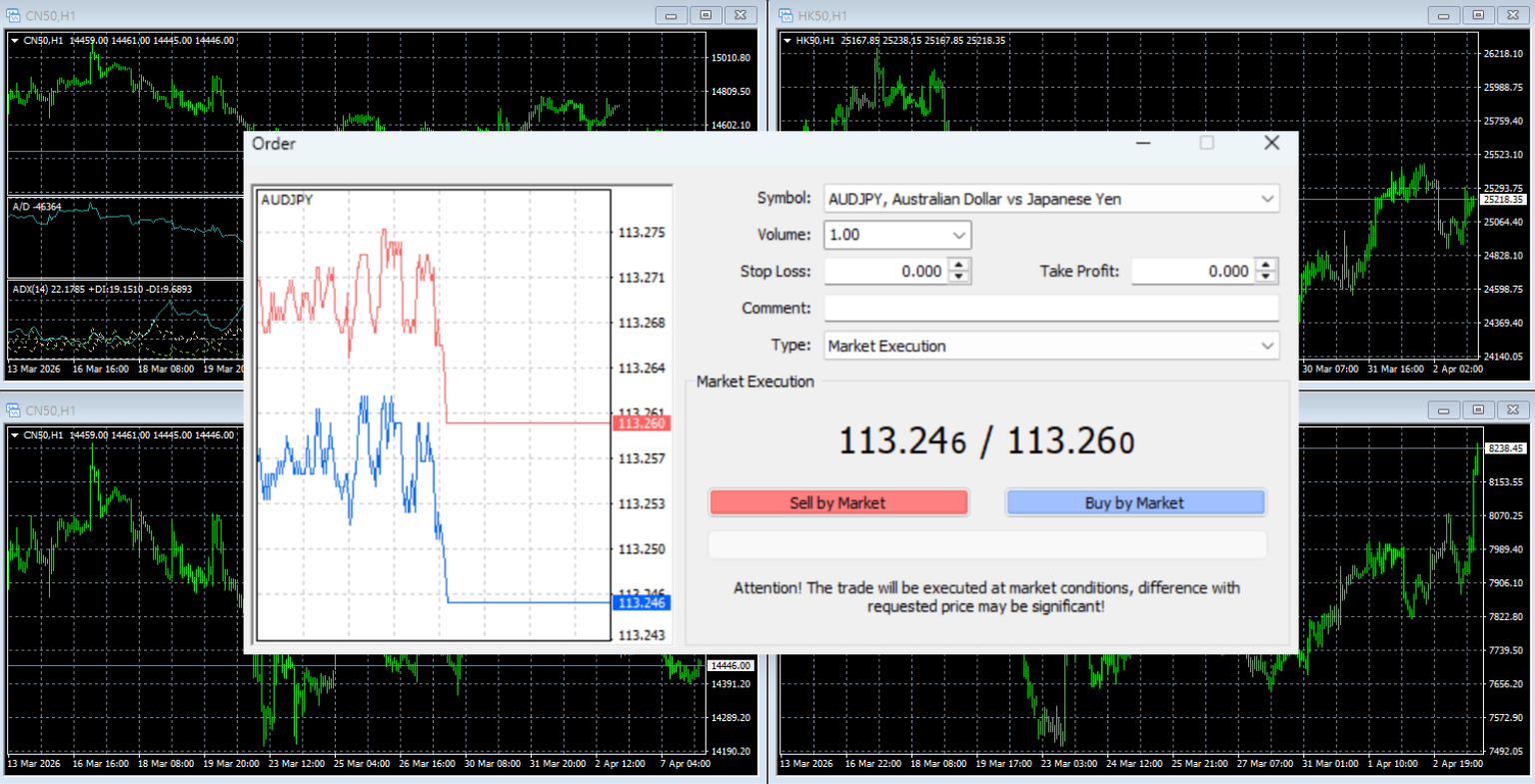
A market order is the most basic type of order, where a trade is executed immediately at the current market price.

For example, if EUR/USD is trading around 1.1000 and you press the Buy button, the trade is executed instantly at the price currently available in the market.
Likewise, selecting Sell will open a position immediately at the current price.

This method allows for quick entry, but it is executed at the “current market price,” not necessarily the exact price you see or want.

Especially during high market volatility, the price you see and the actual execution price may differ slightly—this is called slippage.


🔹 Pending Order: Waiting for Your Desired Price

If a market order is about entering immediately, a pending order is a method where you set your desired price in advance, and the trade is executed automatically when that price is reached.

In other words, instead of entering right away, you wait for a specific price level and enter under planned conditions.

For example, if EUR/USD is currently at 1.1000, you may prefer to wait until it drops to 1.0950 to buy at a better price.
Alternatively, you might want to buy when the price breaks above 1.1050, signaling the start of an upward trend.

This approach allows for more structured trading, as it executes trades only at pre-planned levels rather than emotional decisions.

Pending orders can be divided into two types based on the entry strategy.

제목을-입력해주세요_-020 (2).png

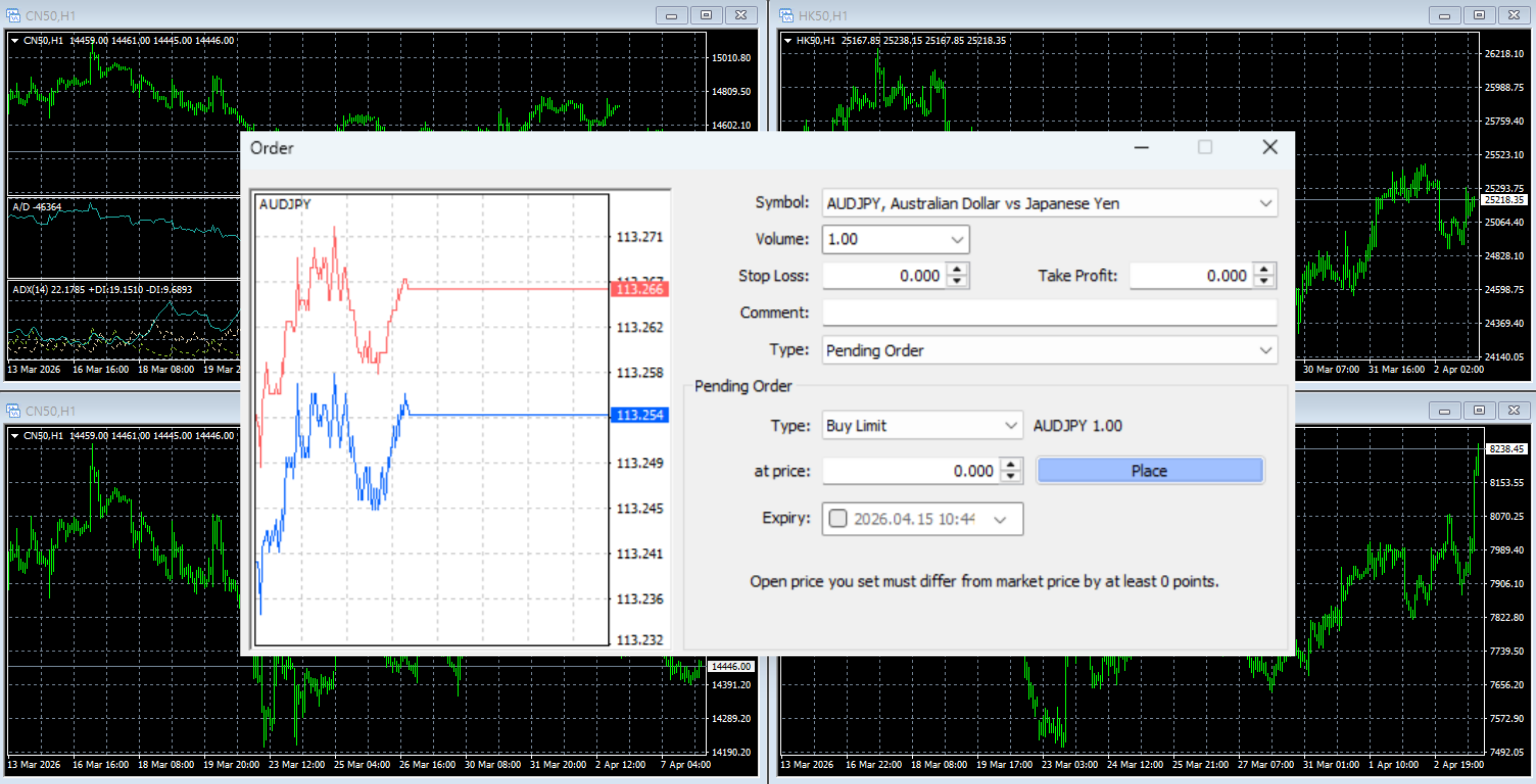
▪ Limit Order: Waiting for a Better Price

A Limit order is used when you want to execute a trade at a more favorable price than the current market price.

For example, if EUR/USD is at 1.1000, you may place a Buy Limit at 1.0950 to purchase at a lower price when the market declines.
Conversely, if you want to sell at a higher price than the current level, you would use a Sell Limit.

This type of order is often understood as “waiting for a better price.”

제목을-입력해주세요_-021 (2).png

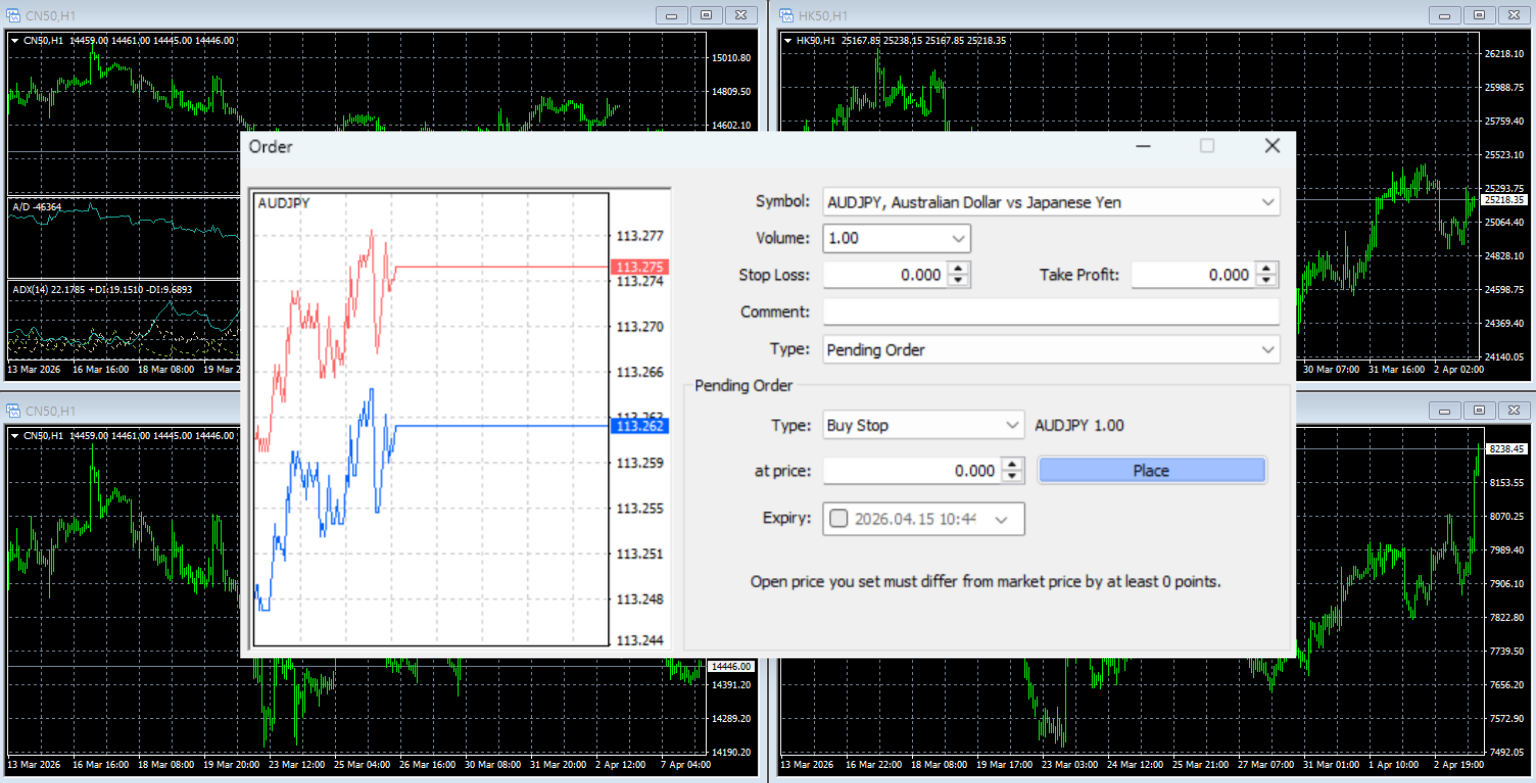
▪ Stop Order: Following the Momentum

A Stop order involves buying at a higher price or selling at a lower price than the current market level, which may initially seem disadvantageous.

However, when the price breaks through a certain level, it can signal the start of a new trend.
Stop orders are used to follow that momentum.

For example, if EUR/USD is at 1.1000, placing a Buy Stop at 1.1050 means you expect the upward trend to continue once that level is broken.
Conversely, placing a Sell Stop below 1.0950 means you expect further downward movement.

In summary:

- Buy Limit: Buy below the current price
- Buy Stop: Buy above the current price
- Sell Limit: Sell above the current price
- Sell Stop: Sell below the current price


🔹 How to Close a Trade (Exit)

제목을-입력해주세요_-021 (2).png

Closing a trade is just as important as entering one.
The process of closing a position is called closing (or exiting) and is done by placing an opposite order.

If you entered with a Buy position, you close it with a Sell order.
If you entered with a Sell position, you close it with a Buy order.

This is because forex trading always involves buying and selling currencies simultaneously, so an opposite order is required to close the position.

For example, if you buy EUR/USD at 1.1000 and the price rises, closing the trade with a Sell order locks in a profit.
If the price falls, closing it results in a loss.


🔹 Why Are Order Types Important?
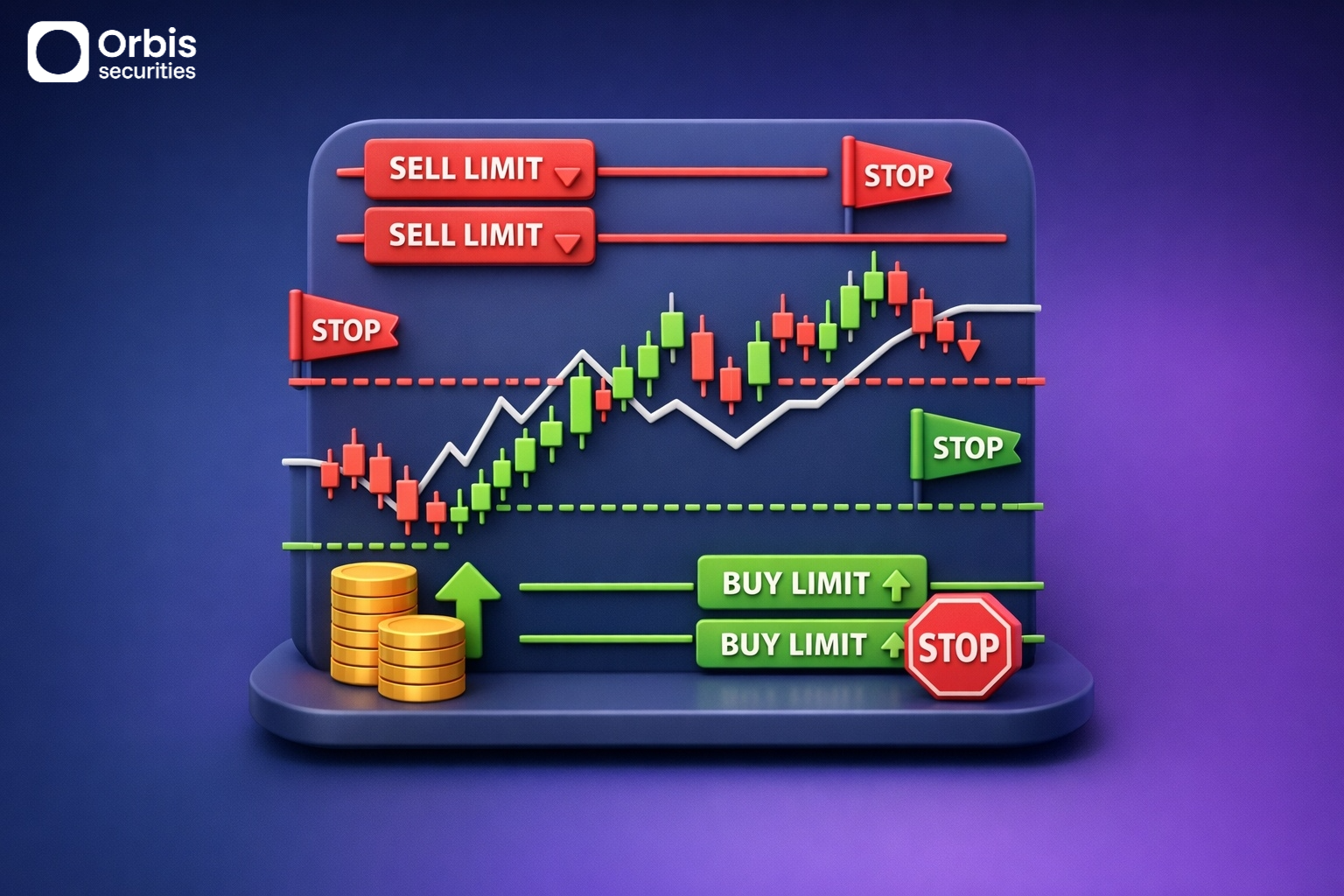
image.png

Beginners often think that “getting the direction right is all that matters.”
However, in real trading, the method of entry can significantly affect the outcome.

Even if you expect the market to rise, your results will differ depending on whether you enter immediately, wait for a pullback, or follow a breakout.

Each approach leads to different risk and reward structures.

Therefore, forex trading is not just about choosing Buy or Sell—it is about planning how to enter the market.
Understanding order types is an essential part of building a structured and effective trading strategy.​