
The goal of trading is not short-term profit, but long-term survival in the market.
Sustainable performance is not created by a single good result.
Instead, it comes from a repeatable routine—a disciplined cycle of behavior that gradually builds a stable profit structure.
The common trait among traders who survive long term is simple:
they have a self-management routine that does not break, even when market conditions change.
🔹 The Three-Step Routine Structure for Survival
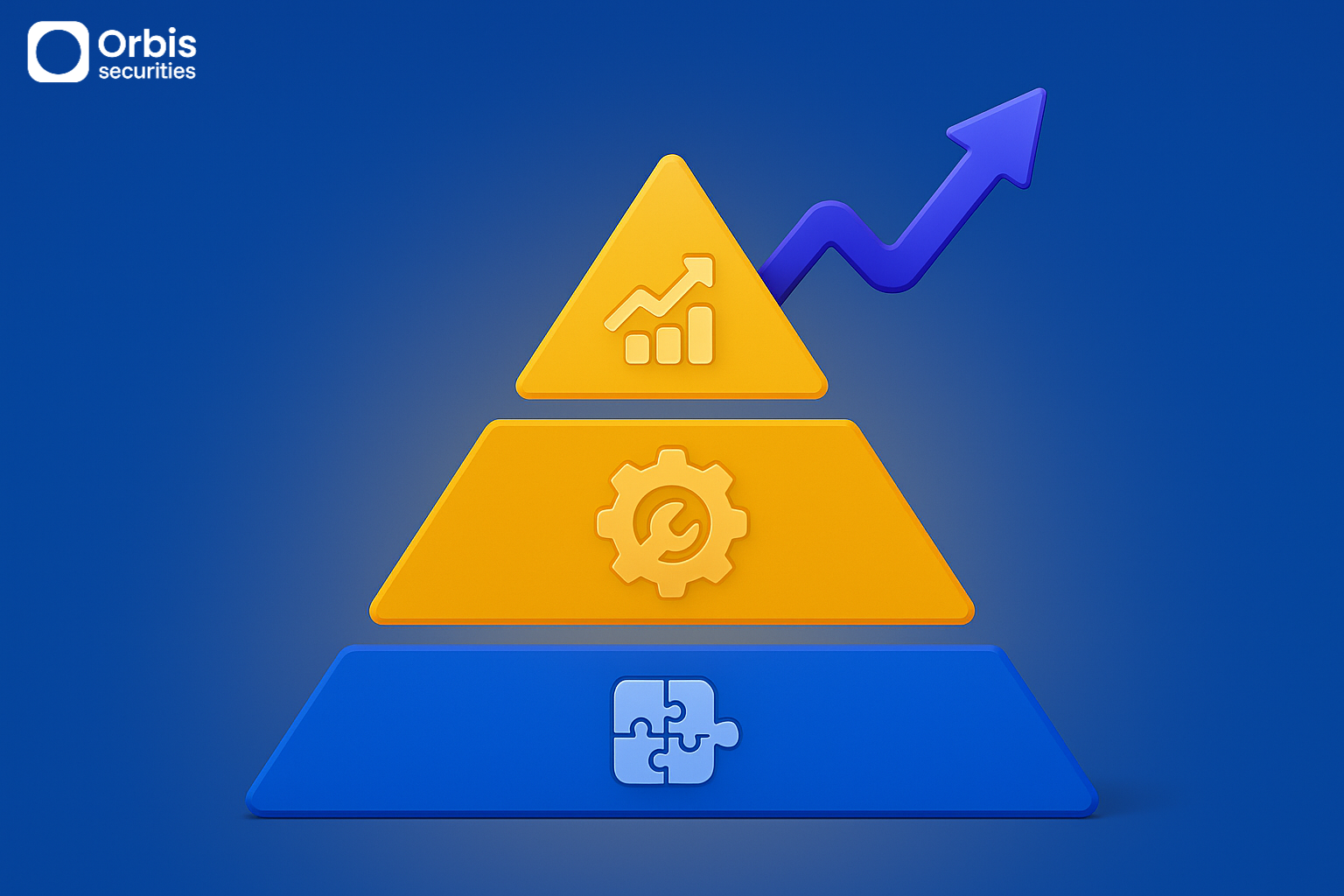
Sustainable trading is built on three key stages.
These are not separate processes, but a continuous cycle.
Before trading, you create a plan.
During trading, you execute that plan.
After trading, you review the results and improve.
As this simple structure repeats, trading gradually shifts from emotion-driven decisions to a system-based approach.
🔹 Before Trading: Preparing to Reduce Uncertainty
In trading, half of the outcome is determined before the entry even happens.
You must first understand the market environment.
Checking economic data schedules, interest rate events, and cross-asset flows is not just gathering information—it is risk reduction in advance.
Next comes setting your objective.
Many people ask, “How much can I make today?”
But the more important question is, “How much can I afford to lose?”
Finally, you must clearly define your entry criteria.
You need to know in advance when to enter and when to exit so that you remain consistent even in uncertain conditions.
Ultimately, a plan is not designed to generate profit—it is designed to ensure consistent decision-making under uncertainty.
🔹 During Trading: Execution Without Emotion
In real market conditions, emotions move faster than plans.
That’s why, during execution, discipline matters more than judgment.
Entries must only occur under predefined conditions.
The moment you act on intuition or impulse, the routine begins to break down.
The same applies to stop loss and take profit.
If you start changing these rules mid-trade, trading shifts from a system into an emotional process.
Position size and overall risk exposure must also remain consistent.
Adjusting size based on wins or losses is one of the main causes of unstable account volatility.
At this stage, the key is not making perfect decisions, but maintaining consistency in following your rules.
🔹 After Trading: Growth Comes from Review
Trading skill is not determined during the trade—but after it.
The goal is not simply to check profit or loss.
What matters is whether the entry followed the plan, and whether the stop loss was executed correctly.
It is also important to record emotions felt during the trade.
Feelings like anxiety, confidence, or impatience tend to create recurring patterns, and recognizing them alone can lead to significant improvement.
Over time, this accumulated data becomes a feedback system that reduces repeated mistakes in future trades.
🔹 The Real Changes Created by Routine
As a routine becomes established, the first noticeable change is in the quality of actions.
Unnecessary trades decrease, and entries become more selective, focusing only on high-probability setups.
After a loss, instead of reacting immediately, you gain the ability to pause and reassess with clarity.
This shift produces results that are more important than short-term profit.
Account volatility stabilizes, and your probability of long-term survival increases.
🔹 What Matters Is Not One Result, but Repeatability
In trading, what truly matters is not a single profitable trade.
The key is whether you have a structure that can be repeated dozens or hundreds of times in the same way.
When the cycle of “Plan → Execute → Review” continues without interruption, trading gradually moves away from prediction and into the realm of management.